Early last week, I had the chance to preview the survival horror game, Daymare: 1994 Sandcastle. This entry is set before the events of Daymare: 1998, which was released in 2019 to questionable critical reception. However, it was Invader Studios’ first release and was made by a relatively small team. Daymare: 1994 Sandcastle has a team of fewer than forty developers on it and looks to be a step up from their first release.
First up is the graphics and it is impressive. Invader Studios uses Unreal Engine 4 to craft a run-down research lab that is relatively immersive. The team uses environmental clues like green lights to guide the player on where they should go. From an animation standpoint, everything was smooth except the backpack which would shake when riding up elevators. I was mostly impressed by the settings menu which not only featured a benchmark tool but also DLSS. Both of these features were surprising to see on a game this size. I personally didn’t need to use DLSS since the game ran at 80 to 110 FPS for me on 1440p max settings with my RTX 3080. Invader Studios recommends an RTX 2060 for an optimal experience since the build is still a work in progress, but they expect it to run even better in the months to come.
Credit: Leonardo Interactive
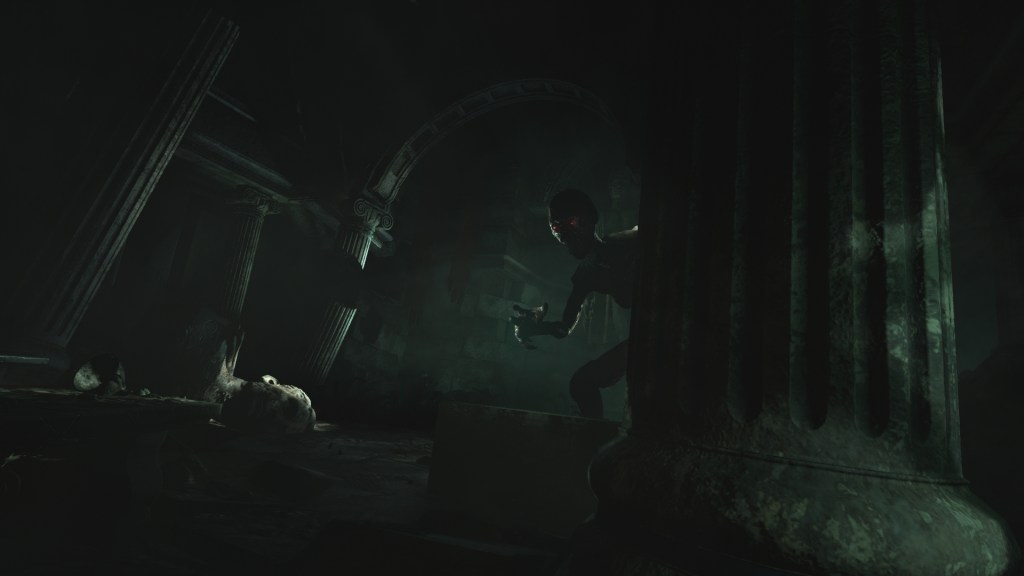
On the gameplay side of things, this game truly felt like a combination of Resident Evil and Dead Space. In the thirty minutes that I played, I experienced two puzzles. One was a computer game where you matched symbols which I enjoyed. The other involved the character having to freeze multiple pipes that would continue to get hot. It probably took a quarter of my demo time to finish this puzzle because I had figured that I missed something since the pipes would continue to unfreeze themselves. However, it turns out I wasn’t freezing them for a long enough period of time to last the entire duration needed. The combat wasn’t bad, but it wasn’t as responsive as I hoped it would be. You would combine the use of the freezing tool and your guns to take down the creatures, but sometimes it felt like bullets were just bouncing right off them and they would grab ahold of you.
There wasn’t much of a sample size since the protagonist Dalila didn’t actually have any conversations and just made quirky remarks, but the voice acting didn’t leave me impressed. However, my mind can obviously be changed once I listen to her in an actual conversation with someone. I didn’t experience any bugs or technical issues, but I did have one more complaint. I felt like Dalila moved a little bit too slow, even when sprinting. It wasn’t the end of the world in a thirty-minute demo, but I question how it would start to feel after a few hours of playing.
Daymare: 1994 Sandcastle is scheduled to release sometime later this year, but you can play the demo that I experienced right now through the Steam Next Fest which will run from February 21st to the 28th. Thank you to Leonardo Interactive for providing the early preview copy.
Thank you to Frictional Games for providing a review copy
When I first launched Amnesia: Rebirth, I had no idea what to expect. I’ve never played an Amnesia title before Rebirth, but I have always heard that its predecessors The Dark Descent and A Machine for Pigs were fantastic horror experiences that must be enjoyed at least once. I still have failed to do this, but after spending time with Rebirth I feel I can’t neglect them any longer, due to how phenomenally horrid this third installment is. This won’t be a full review unfortunately, however, as by the time our review copy arrived our team here at TGP had already been heavily preoccupied with compiling notes and working on coverage for the newly released Watch Dogs: Legion. Regardless, the title is too great to skip discussing outright, so this article will cover my earnest thoughts and honest impressions from the somewhat substantial slice of the game I’ve played through. Without further delay and before I lose my memory (bad joke, I’m aware), here are my impressions of Amnesia: Rebirth, the true sequel to Amnesia: The Dark Descent.
Image Credit: Frictional Games
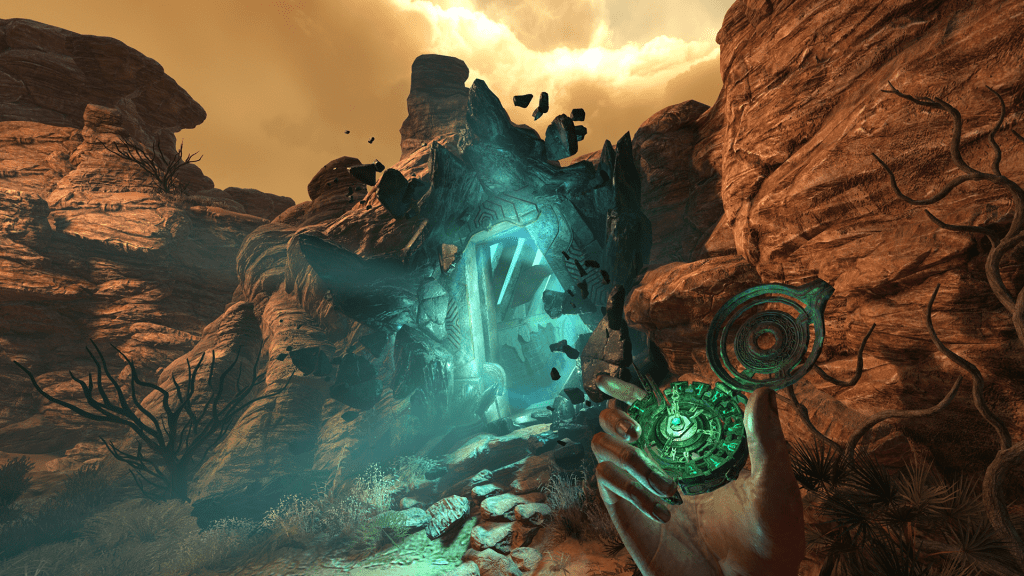
There is one key aspect of Amnesia: Rebirth that makes this title as excellent as it is, one component that outshines everything else the game has to offer: atmosphere. In the beginning of the title, you are stranded via a supernaturally induced plane crash in the middle of a Middle-Eastern Desert in the 1930’s, with no satellite phone being invented yet to call for help. You wake up on your own and with barely any recollection of your past, and the game immediately drives home the point that you are isolated without allies, but not necessarily entirely alone; you are instantly hit with the sense of being watched with malicious intent, it’s apparent and further implemented deeper subtlety over time. This unsettling feeling is amplified even more due to your only human contact (corpses aside) being provided through regaining memories, which introduces compelling characters without even talking to them face-to-face. These relapses of memory are quite frequent, and therefore the player is consistently being provided meaningful exposition and backstory on a sprawling cast of characters with each slice of memory retained. When you’re not traipsing over the scorching dunes or restoring your memory, more often than not you’ll find yourself in a cave or some other underground area; which is where the horror of Amnesia: Rebirth shines and is put on full display. The unsettling atmosphere ramps up significantly in these sections, mainly due to the sound design. From the drops of water plummeting from the ceiling and smacking into the stone beneath you to infiltrating winds blowing through miniscule cracks of light and swooshing throughout the cave, the hollow emptiness of the noises around you really drives home the aforementioned sense of isolation and the fear of being lost in an unknown, desolate land. These sections in particular, and especially when in a confined, dark passage, personally give me a sense of claustrophobia; and I’m not even the slightest bit claustrophobic in real life! That, right there, is incredible fear factor that this game achieves so easily, which many other horror titles fail to come remotely close to even with much more, although forced effort. Additionally, at one point during my exhilarating underground escapades of Arabia, I discovered a special compass with supernatural properties. I won’t spoil the narrative specifics of this contraption, but it does allow the player to travel between two different worlds, or realities, or planes of existence: one of those three nonetheless. Going back and forth between the two worlds is not only a neat gameplay element, but it also provides the player with an amplified feeling of uneasiness by making it a bit difficult to discern what truly is “reality”. As I stated previously, however, I won’t speak a word of the story as that is the main reason to play through this title to the end; but what I will say is that the plot is immensely intriguing and dabbles in biblical/religious history and mythology from multiple cultures/civilizations embedded with supernatural elements, themes, and legends.
Image Credit: Frictional Games
But that’s enough about the atmosphere of Amnesia: Rebirth, because the intricate gameplay must be mentioned as well. First and foremost, the amount of items the player can interact with and examine is absurd compared to titles of any genre, including point-and-click adventure games. Almost every item is interactable, allowing the player to engage the environment with an unparalleled level of detail and finesse. The other main component of the gameplay is the fear mechanic, which I’m mostly indifferent to. Whenever you don’t have light in a darkened area or see something disturbing, your character’s fear level increases; if it increases too much, you’ll reach a game over. It makes sense narrative wise due to the main character’s history with mental health, but can be irritating in gameplay when you find yourself out of matches and trying to locate the route to progress.
Image Credit: Frictional Games
Regarding visuals, the graphics on display in Amnesia: Rebirth are adequate for the $30 USD retail price point. The art-style opts for a stylized appearance over photorealism, which fits the genre and game with no conflicts regarding the narrative or theme. In particular, the art-style is radiant when the player is present within the alternate plane of existence. Also, there aren’t an exorbitant amount of graphics options to fine-tune, but the necessary ones for the majority of players are there. Overall, Amnesia: Rebirth is a strong and formidable contender for the best horror game of 2020, and I believe it’s well-worth any horror fan’s time: this is a title to remember (and I will never apologize for any of these puns).
Thank you to 505 Games & All in! Games for providing the early review copy.
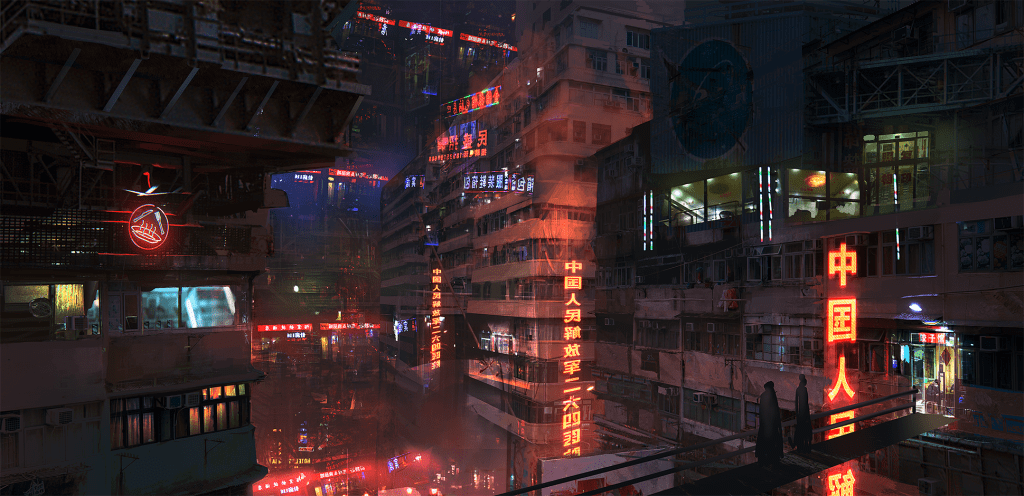
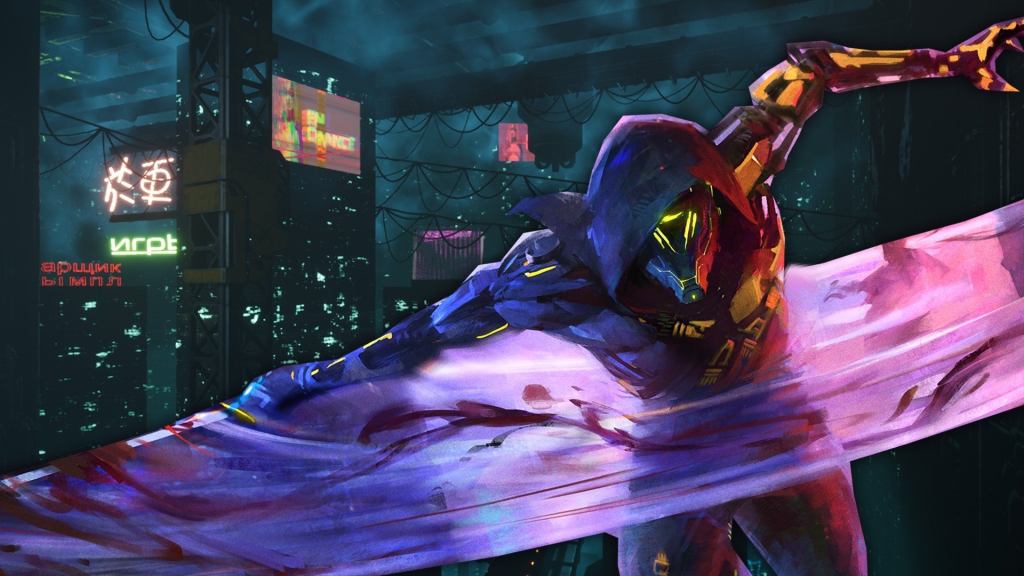
Ghostrunner is a title that I desperately wanted to love, and in some regards I do. The combination of first-person, parkour platforming in a dystopian cyberpunk setting, mixed with incredibly fast-paced combat whose difficulty is in the vein of Superhot is an excellent blend for a game, at least in theory. Two of those ingredients are superb, but there’s one that unfortunately, for the most part, tarnishes the entire experience. Because of that tainted ingredient, I was unfortunately unable to complete the game, and so this won’t be a full review with a final score; think of this as just my unfiltered, honest thoughts of the title based on the three or so hours I have played. Before we delve into that, however, the positive aspects of this game are undoubtedly worth mentioning as they are near phenomenal. To start, we’ll discuss the strongest part of the experience: combat. As previously mentioned, the combat featured in Ghostrunner draws inspiration from Superhot, yet at the same time is its polar opposite. Your character still dies in one hit, like the aforementioned Superhot, but unlike it time doesn’t only progress when you move. Instead, Ghostrunner encourages the player to constantly be on the move to avoid sustaining a fatal blow. This inverse is impeccable, and results in the combat being high-octane and adrenaline inducing. The one shot health increases the challenge, which forces the player to rely on not only speed but precision as well. The katana you brandish is the perfect weapon for this gameplay blend (although it doesn’t always work when trying to deflect bullets), and your character’s movement while dispatching enemy after enemy is extremely fluid, from running and sliding to dodging and weaving. There aren’t an absurd amount of inputs needed to pull these movements off either, as controls are minimal but intuitive. Next, let’s discuss the second compelling component of Ghostrunner: the setting. While the story is intriguing at first, I don’t know much past the initial three hours to fully judge it. However, from what I have played it shows great promise with its interesting, slightly unique premise that I won’t spoil here. The setting, though, fits the story and gameplay themes splendidly with a gorgeous digitized art-style that obviously borrows some elements from the beloved Shadow Warrior series. Furthermore the graphics, especially for a $30 USD title, are exceptional and fit the art-style perfectly. This is where my praise for Ghostrunner comes to an end though, as the final topic to be covered, platforming, is utterly abysmal and abhorrent.
Credit: 505 Games & All in! Games
I died to platforming sections at an exorbitant degree compared to gunfire. In short, the platforming level design is too intricate and requires far more precision than the gameplay mechanics allow, and the title doesn’t provide the player with any checkpoints mid-way through these sections (and before anyone asks, I’ll provide examples). The most often occurrence would be attempting a wall-run and sliding off of said wall and dying, even though my character clearly made contact with the surface. There were also instances of using the grappling hook successfully at first, but then being detached mid-transit or slamming into the hooks and falling. Other times, merely trying to scale a raised platform of unsubstantial height would result in yet another cycle of face-planting and falling to my doom. Finally, the dodge mechanic is inconsistent to say the least, as I had bullets track me through dodges and still kill my character. Ghostunner, overall, shows brilliant promise and potential with its gameplay, combat, setting and story; but is completely undermined by some of the most egregiously busted platforming mechanics I have ever experienced. I would wager a patch or rework of some of the level-design is necessary before expecting players to shell out their hard-earned cash.




 The Game Preview