Thank you to Activision for providing a review copy. (Reviewed on PS4 Pro)
Introduction
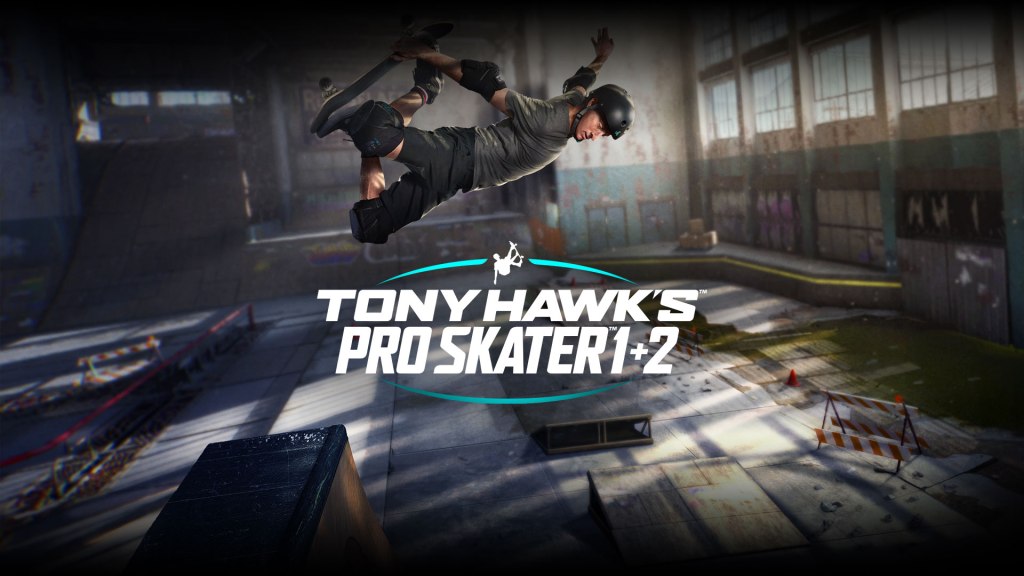
When I first launched Tony Hawk’s Pro Skater 1+2 for the first time, I was near immediately launched into pure serenity. Seeing that title screen again set to that classic soundtrack, I already knew that this was going to be everything that I wanted it to be. Sure I may have been partially blinded by nostalgia, but that didn’t last long whatsoever. As I went through the tutorials to re-familiarize myself with the controls and then went on to play through the parks, I was met with an impeccable game. Of course I had to take playing all of the Tony Hawk games growing up into consideration in the interest of remaining objective, but even if I didn’t play said titles my opinion of this release would remain the same. THPS1+2 is a masterfully executed recreation of the two hit classics, and quite possibly the most faithful remake I’ve ever played.
Credit: Tony Hawk Game
Graphics and Visuals
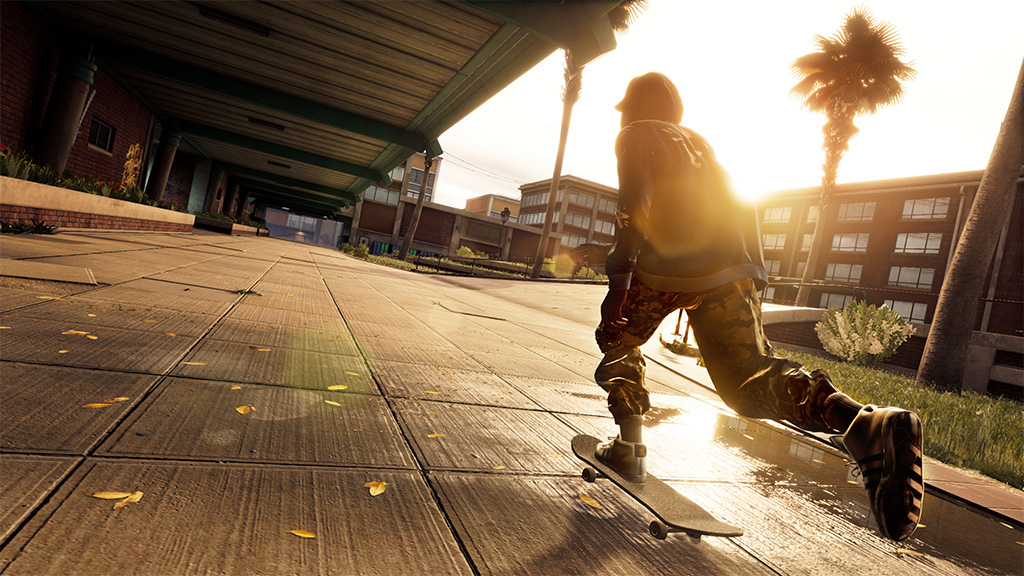
When I made my 2020 return to the iconic School in Tony Hawk’s Pro Skater, my jaw nearly dropped. While the graphics aren’t up to the level of the highest-budget triple A titles made today, they have no reason to be. Especially for a $40 title which contains two games from the PS2 era remade from the ground up, the graphics on display are beautiful. Just about everything has been improved visually in every way possible, you name it. Lighting, shadows, water effects, textures, frame rate, visual fidelity; the improvements are incredibly vast and just as numerous. Vicarious Visions clearly paid close attention to what made the originals stunning back in the day, and simply brought that back and greatly enhanced those aspects for the modern age.
Credit: Tony Hawk Game
Gameplay and Content
I’ll start this section by letting the purists out there know that if you’ve played the originals, it’s nearly identical. To make it explicitly clear for any newcomers, however, that is an amazing thing and nowhere near being considered a con. The game/skating mechanics are solid and work near flawlessly majority of the time. Additionally, and as I mentioned previously, there are very intuitive tutorials as well to hone said mechanics and practice to your heart’s content. Whether you’re stuck on a park challenge or just need a quick refresher, the tutorials are genuinely useful. However, these mechanics mean nothing without using them to perform insane tricks, which I’m happy to report there are a massive amount of. It’s never been more fun to learn, master, and build custom creative combos out of the near countless amount of moves available. If you ever encounter any frustrating obstacles you just can’t seem to get past, however, Vicarious Visions has you covered for that as well with Game Mods. Game Mods are completely optional features toggled from a sub-menu on the main menu that make the game much easier for newcomers, and although I personally didn’t utilize them they are a welcome addition. For me, the challenge is a massive, necessary part of the experience. The feeling and drive the game instills of wanting to improve my ability and increase my high scores provides an immense amount of replay value; finally landing a trick or a crazy combo I was struggling to pull off is unbelievably satisfying. Speaking of replay value, though, Tony Hawk’s Pro Skater 1+2 is filled to the absolute brim with it. There is a staggering amount of content: the nine parks from THPS1 along with the eight parks from THPS2 with all of their collective challenges beautifully remade, the endlessly replayable free skate mode, multiplayer modes to chill and skate with your friends, create a park which already has active creators, over seven-hundred career challenges to grind out across all modes, and a bunch of cosmetic customization options to boot. There are frankly a ton of customization options for your skater’s clothing and board, and that’s on top of the twenty-two pro skaters to play as along with the four custom “create your own” skater slots provided to you. All of said cosmetics are, thankfully, earned exclusively in-game through gameplay progression: no micro-transactions in sight! With everything this package has on offer, there will never be enough downtime to invoke boredom.
Credit: Tony Hawk Game
Glitches and Technical Issues
Not all is perfect in paradise however, though to be fair it nearly is. In my time with Tony Haw’s Pro Skater 1+2, I experienced a few clipping issues with my skater’s character model but they were nothing major or remotely game-breaking. Additionally, at times my skater could feel a bit stiff to control as well, but the issue wasn’t consistent enough to be a large detraction. Furthermore, the controls would sometimes be unresponsive at moments when dealing with multiple rapid inputs which lead to frustration, however it wasn’t a common occurrence. Overall, these complaints are only minor and I wouldn’t be remotely surprised if they were patched in the future.
Credit: Tony Hawk Game
Conclusion
Tony Hawk’s Pro Skater 1+2 is downright one of the best remakes I have ever played, if not the current best. The games still retained their identities after all these years and it is blatantly apparent, although given a significant visual upgrade. The gameplay is still as smooth and intuitive as it ever was, with near endless replay-ability to enjoy said gameplay however much you want. That’s on top of all of the customization options to unlock, so you always feel like you are constantly making progress. There are a few minor technical bugs, but they’re just that: minor and mostly insignificant. Tony Hawk’s Pro Skater is back in full force, and I sincerely hope Vicarious Visions is already planning their next installment for the revitalized franchise we all know and love.
The Call of Duty Black Ops series has been the subject of both critical acclaim and fan outrage in the past, leaving a track record that is inconsistent to say the least. It is generally agreed upon that the first Black Ops and its sequel, Black Ops 2, were the pinnacle releases of the series and that the following entries, numbers three and four, were, well, extremely lackluster. Some, like myself, would go as far as to say that they were just genuinely bad games; bearing very little resemblance to the Black Ops of yore and struggling to captivate audiences with changes no one asked for while stumbling every step of the way (ex. far future setting, BO3’s story using ‘it was all a dream’ cop out, BO4 not even having a campaign, Overwatch hero-like operators and abilities, etc.). Suffice to say, what Black Ops was praised for from 2010-2012 had seemingly disappeared indefinitely from the series. However, that may have all changed on August 26th of this year, when Treyarch revealed their next iteration of the Black Ops franchise: Call of Duty Black Ops Cold War. With what appears to be a return to form for the series, this direct sequel to Black Ops 1 is looking to bring back the players from that golden age. A grand comeback is not certain, though, as there are many concerns being circulated about this title and Treyarch’s uneven track record. There are a lot of mechanics and elements that should be reintroduced with this entry, and just as many that should be left behind and forgotten; if not more so.
Want: A Compelling Story that holds no punches
Many were taken aback with the “gritty realism” that the recently rebooted Modern Warfare displayed, including many “critics”, but to be honest it was pretty tame with all things considered. Anything that was incredibly graphic was censored, and what was supposed to be shocking was relatively weak compared to the brutality of Black Ops 1’s torture, napalm, and communist slaughter filled escapade throughout Cuba, Vietnam, and the U.S.S.R. With Black Ops Cold War, I’d like to see a strong continuation of that, if not an increased amount of staggering moments. With choices altering the story and multiple endings confirmed, it seems that there may be some thin lines you can choose to cross in BOCW; a hopeful sign for veteran Black Ops players everywhere. Treyarch, this isn’t rated E for Everyone, so don’t hold back. The Cold War was brutal, so make it brutal. Know your history, show us what you got.
Don’t Want: A Flat Protagonist
In Black Ops Cold War’s campaign, the player will be creating their own main protagonist to fight alongside series icons such as Sgt. Frank Woods, Cpt. Alex Mason, and their C.I.A handler Jason Hudson. This might appeal to some who’d wish to further immerse themselves in the shoes of their player character, but it could very well lead to narrative problems as well. Without a solid lead character, such as Alex Mason in BO1 and his son David and BO2, I fear we may not receive the same caliber of storytelling. Playing as and getting to know these characters created a strong bond between the COD community and the Masons, and continuing the story as someone new might be off-putting. Especially considering that the main protagonist may not even have a name (like in BO3 when you were just called ‘player’, real creative Treyarch), I don’t see how I’ll be able to relate to them. Additionally, if said created protagonist wasn’t to be voiced, that would be another massive step backwards as well, as both Alex and David provided extensive, informative narrative commentary while fighting/playing as them. This is a massive gamble, Treyarch, and I hope it pays off. Please don’t botch it, make it memorable in a positive way (unlike the entirety of BO3’s disjointed mess of a campaign).
Want: Dolphin Dive over Slide
This is a minor detail in the grand scheme but I feel it’s worth mentioning. Please bring the Dolphin Dive back to Black Ops, every other FPS nowadays already has sliding ;its generic and overused beyond belief (also, newsflash, you shouldn’t be able to slide all over the place like a salamander with full kit! This isn’t Titanfall). Plus, dolphin diving is just more fun in my opinion and isn’t as easy to abuse in MP as sliding. Bring us back to the good old days.
Don’t Want: Overly complicated Zombies
Now I may be in the minority on this, but I feel that BO2 had struck the perfect balance between easter-egg lore hunting and classic wave-based survival fun. With, BO3 and subsequently BO4, however, the former firmly overtook the latter. With a massive amount of new mechanics introduced with each new release and map within them, the simplicity of zombies was muddied and lost. Yes, of course I want easter-eggs and of course I don’t want them to be easy to achieve. However, the entirety of the mode should not focus on that one singular aspect. What made zombies successful in the first place in WAW was incredibly fun, wave-based survival with your friends. There were no easter-eggs, and they weren’t needed. It was just good fun. As I said previously, though, BO2 took that fun and didn’t lose a bit of it, while also having an intriguing storyline and vaguely complicated easter-eggs to boot. Regain that balance, Treyarch, and zombies will return as the titan it once was.
Want: The Definitive Story of Viktor Reznov
What happened to Tricky Vik? Did he die in Vorkuta, like Hudson claims to Mason in ‘Revelations’ of BO1? Sure, all the signs would seemingly point in that direction. But Treyarch has a habit of being cheeky, and that was made very apparent by the ending of the BO2 mission ‘Old Wounds’. If you recall, the US and Chinese forces were betrayed and left to die by the Mujaheddin after the interrogation and subsequent execution of Kravchenko. Mason and his allies were buried up to their heads in the dunes of Afghanistan, with no rescue expected. But who comes and pulls Mason free, riding gallantly on horseback? Captain Viktor Reznov. If it were truly him, it would make sense for him to be there, considering Kravchenko was his only betrayer left breathing and he would want his revenge completed. Whatever the truth may be, I need to know it. It’s been eight years Treyarch and the question must be answered: what really happened to Viktor Reznov?
Don’t Want: Revisionist History
Treyarch, you claim for us to know our history, but do you even know the facts for yourself? My confidence in you was bolstered by playing clips of the extremely wise Yuri Bezmenov in your trailer, a Soviet defector who shined a light on many of their unsavory deeds and tactics, mainly subversion. This made me start to believe a historically accurate campaign was all but assured, one that would show just how evil the U.S.S.R was along with the devastation and millions of deaths Communism brings every time it’s put into place. However, my faith has been shaken a great deal because you cowardly censored the trailer to appease China and the CCP. You cut out footage of Tienanmen Square, and for what? To sell more copies? Mao’s China killed a minimum of eighty million people during his reign, with who knows how many after. Their government today is actively stripping the liberties of Hong Kong and committing a genocide against the Uighur Muslims, yet you continue to appease them and their ludicrous demands. Tienanmen Square happened, deal with it. To tell us to know our history yet already censor crucial historical footage before the trailer is even out for a week is pathetic. Maybe it’s Activision, maybe it’s Treyarch, maybe it’s both. Regardless, whoever is responsible should prioritize morals over profit for once and grow a backbone. If this is the kind of antics they’re pulling before the game is even out, how do we know that the campaign won’t be riddled with revisionist history? I don’t necessarily mind if you take a light liberty with historical fact here or there for the sake of a dramatic narrative, but don’t try to deceive your player-base by pretending major historical events didn’t happen or lie about anything else of that magnitude. You managed to achieve that in BO1 and BO2, and I’m sincerely hoping that will continue to be the case with Cold War. In fact, I imagine it will, but censoring just the trailer to appease communist Chinese censors is deeply concerning.
Thank you to Cold Symmetry and Playstack for providing an early access copy.
Mortal Shell is a new souls-like title that recently just released this past week on the 18th of August. Unfortunately due to technical issues out of my control (issues not caused by the game of discussion), I haven’t been able to play much of it at all. Because of this and in the interest of fairness, I won’t be penning a full review, more so my initial impressions of what the game has on offer. However, the short period of time I’ve spent with Mortal Shell can be accurately summarized with two words: grossly incandescent.
Credit: Mortal Shell Game
Mortal Shell, in my opinion, shines greater and brighter than all the previous Souls-like games I’ve played that haven’t been directly developed by FromSoftware themselves. I believe this is because of the clear love for Demon’s Souls and Dark Souls that the developers have proudly expressed, along with it being blatantly apparent inside the game itself. The dark and dreary atmosphere, the cryptic lore dished out through incredibly well-acted NPC’s and item descriptions, the heavy and weighted combat; everything, even down to the minutest detail such as loading screens, screams “Souls!”. Imitation in this manner is not to be frowned upon, since when done with this level of respect for the source material it is the most sincere form of flattery. However, Mortal Shell is very much its own game with unique concepts not present in Soulsborne. The main aspect of the game which separates it from the rest of the pack would have to be the shell and harden systems. Instead of wearing and swapping armor sets, your character possesses the shells of long-deceased warriors that they stumble across during their journey. These different shells have distinct characteristics that allow for multiple styles of play, along with altering the player’s appearance. With all of these shells, however, you are granted the ability to harden. When activated, this will negate the damage of the next attack you are struck with as long as you maintain the stationary stance. Although, if timed properly, this can also stagger an enemy and open them up for a good ol’ stab. Managing this mechanic and using it to your advantage in combat is fun and often rewarding, catapulting Mortal Shell into a category above prior Souls-likes who failed to innovate in a similar fashion.
Credit: Mortal Shell Game
While I haven’t spent much time with Mortal Shell, that won’t stop me whatsoever from recommending it. For $30, you get a visually stunning game for the price along with gameplay that has effectively set the new standard for future Souls-like titles. I can’t wait to jump back into my PC playthrough, and I am anxiously anticipating the physical release for the title as well on October 2nd to being my platinum trophy journey. But, until then, stick around TGP for everything Soulsborne and Souls-like alike.
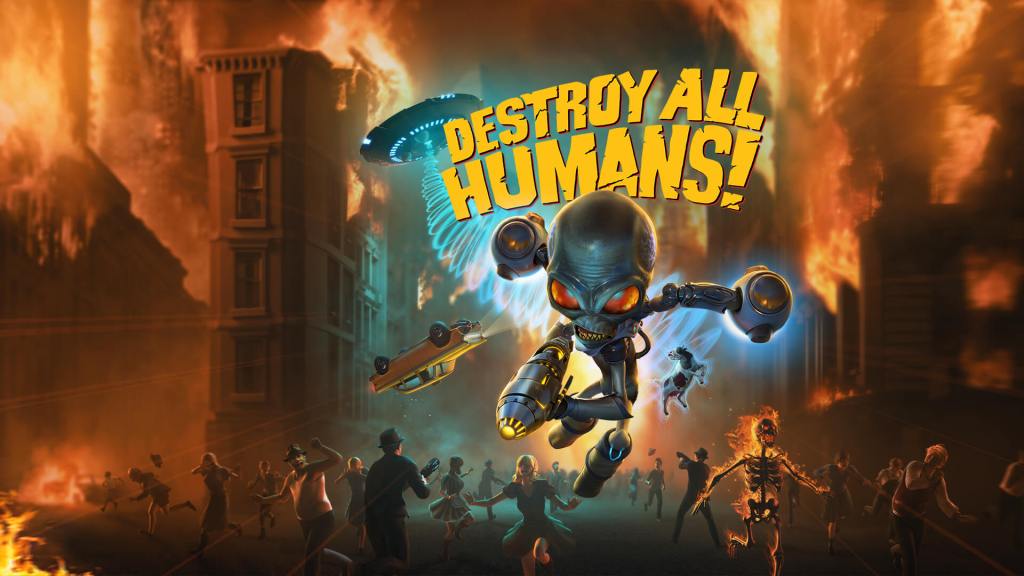
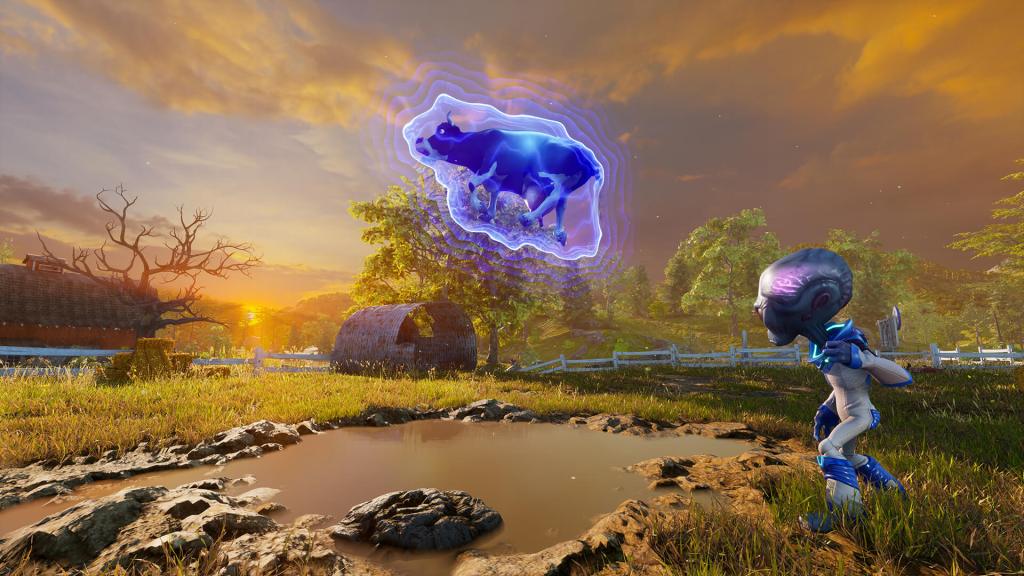
Earlier today, I subjugated the entirety of the United States of America in the name of the glorious Furon Empire; and what fun it was. Destroy All Humans is back like a blast from the past, the original that is, beautifully remade from the ground up for the Xbox One, PS4, and PC platforms. Before I continue, I want it to be established that I’ve been playing and adoring the DAH franchise since I was in grade school (Path of the Furon in particular was like a drug to me), so any criticisms I levy come from a place of genuine love in the hopes of patched improvements and the overall continuation of the IP. To be clear, this is by no means a review; more so my impressions of the title and what the franchise may (hopefully) hold in store for us in the future. So, without further delay, did Blackforest Games walk the Path of the Furon? Or did they stray from the light?
Credit: THQ Nordic
Faithful to the Furon Empire
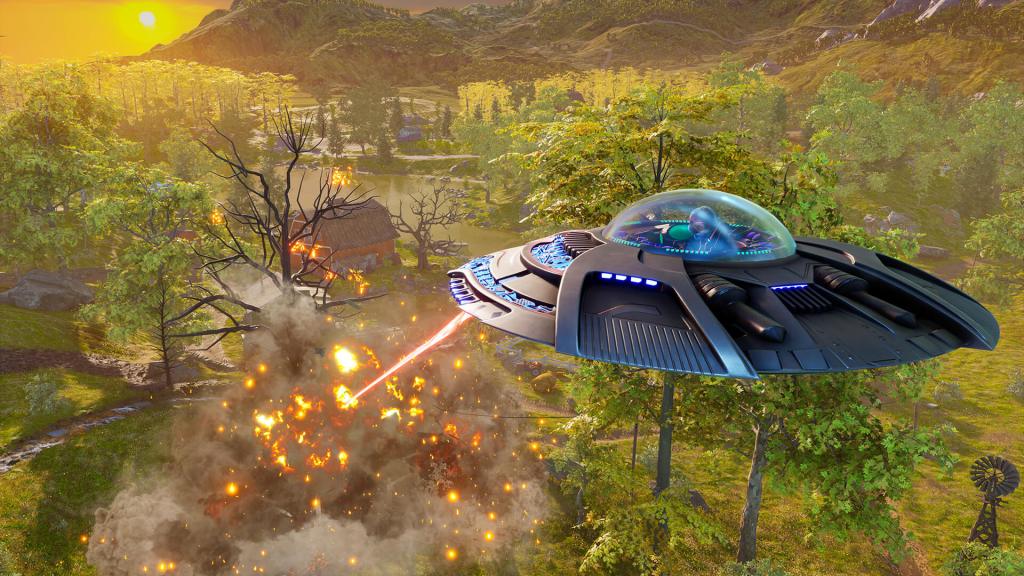
I have to admit, I was extremely nervous when this remake was announced. DAH is infamously known for it’s crude humor, and in 2020 that bothers quite a lot of people. Luckily, Blackforest Games has backbone, and none of the dialogue or story from the original was altered in the slightest. Almost immediately relieved of that concern after starting my playthrough, I was eager to see how this beloved game from my childhood would look with modern graphics. Personally, I believe Blackforest Games did a phenomenal job with the visuals, capturing the aesthetic and feel of the original while simply modernizing it. This is how you do a proper remake! Additionally, the gameplay is just as ludicrously entertaining as it’s always been, nearly identical to the play style of the original (but again, more fluid and modernized). When it comes to what really matters, retaining it’s identity, Destroy All Humans Remake outright succeeds in every fashion. There are few games that make me feel like a kid again, and I’m elated to say this is one of them. Even if you aren’t partially blinded by nostalgia, the title offers an immense amount of fun to be had and carnage to cause. However, the game is not without faults, and in my opinion all of said faults are of the technical variety.
Credit: THQ Nordic
A Glitch in the System
To my dismay, not all is smooth sailing in DAH Remake. Technical issues and bugs hinder the experience to a noticeable degree, those of which I will now outline:
Frequent frame Drops Below 15 FPS (on Xbox One X)
Pulled out of Holo-Bob disguise for no reason whatsoever
Audio-skipping throughout entire playthrough (almost unbearable with headphones)
Objects completely missing locked-on targets with PK
Rare, occasional crashes
Some poorly placed checkpoints which lead to repeated mission failures in certain instances
All of that being said, if these problems are patched I would have virtually no issues with DAH Remake.
Credit: THQ Nordic
The Future of the Furon
Seeing as how we have a “new” DAH game in 2020, well after the franchise’s supposed demise in 2008, all things are possible. Although the metascore for DAH Remake lingers just under a 70, I sincerely hope this doesn’t discourage THQ Nordic and Blackforest Games from fully reviving and revitalizing this fantastic franchise. If anyone from either company is reading this, I have a personal message for you: please, for the love of all that is good in this universe, remake Destroy All Humans 2 as your next project. This was an incredible starting point, and now being more experienced with DAH as a whole you could all truly bring this beloved IP back from the grave in full force and with that signature Cryptosporidium-style. Keep doing exactly what all of you are doing and you could easily amass a sizable fan base, and in the future even possibly remake the Path of Furon or who knows, even create an all new DAH game entirely from scratch. The only suggestion I would make is to spend way more time in QA. The bugs and technical issues I previously mentioned could indeed be a lot worse, however in tandem these grievances caused some furious frustration. I encourage you all to take the next step with this incredible IP; the Future of the Furon Empire is in your capable hands. Don’t let us down.
Thank you to Wales Interactive for providing an early review copy.
Introduction
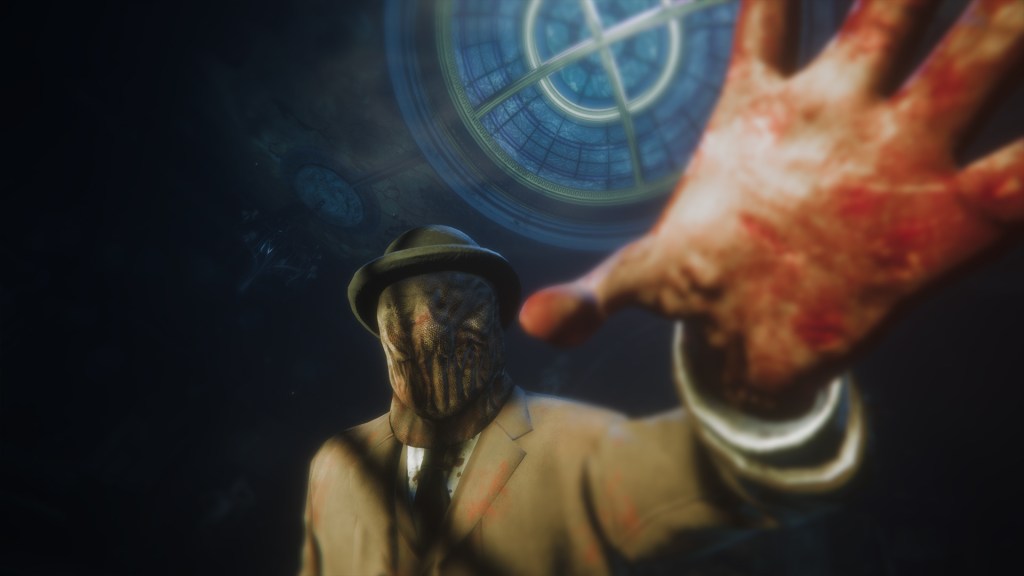
Maid of Sker is the next game from indie studio Wales Interactive, who have released previous titles such as Late Shift and Don’t Knock Twice. Delving into the horror genre, Maid of Sker aims to capture an audience with an unique premise, one that really hasn’t been attempted in the mainstream before (at least to my knowledge): Welsh Mythological Horror. At first, and to be fair by the end as well, they succeeded in this regard. The story had captured my full attention, littered with intriguing imagery, disturbing yet informative lore notes, compelling character dialogue, and eerie atmosphere. However, the impact of all of this is minimized, due unfortunately to some minor technical issues, abhorrently broken mechanics, and overly obtuse puzzle solving. Maid of Sker is a majorly mixed bag, with pros and cons engulfed in a never ending battle of tug of war; keeping the title from becoming either a flawless masterpiece or an abysmal failure.
Credit: Wales Interactive
The Good
Maid of Sker definitely has its faults, but what it does right is done extremely well. As I mentioned earlier, the Wales 1898 setting is immediately captivating. Upon exiting the train to Sker Hotel, I couldn’t help but constantly pan my camera around to soak in the aesthetic of the dreary Welsh countryside. I felt as if something heavy was in the air all around me, as if the land I’ve just entered was plagued by an evil spell. The ominous atmosphere was firmly established, which is impressive yet crucial to do this early into a title’s runtime. This is also aided by the graphics and in particular the lighting in certain places, although generally speaking I would say the visuals are adequate for the price. However, the main draw to Maid of Sker has to be the story. You play as Thomas, a composer and husband to Elizabeth Williams. Having received a letter from Elizabeth requesting your help with some family matters under dire circumstances, you head off to the Williams ancestral home: Sker Hotel. I won’t discuss much more about the story or heavily dissect the plot as I’m firmly against spoilers, but I will say I wanted to find out every little detail of the madness that was occurring. Luckily, the game expected this, as there are lore notes scattered throughout the property that will provide key insights to the strife the Williams family has caused and endured. Slowly but surely, you will put the pieces together yourself to discover the truth to the nightmare. Additionally, the mythological aspects that come into play are fascinating, since prior to playing this title I had no knowledge of Welsh folklore. However, I’m reluctant to elaborate any further; as the story and the horrid, hidden truths you will find are the main reason to play the game. Unfortunately, the true horrors of Sker Hotel are decidedly not the terrors the developers intended.
Credit: Wales Interactive
The Bad
There is one issue that I have with Maid of Sker that takes precedent above all else and must be addressed first: the breathing mechanic. In the game, your main method of dispatching enemies is, well, to not dispose of them at all. Without giving too much away, the monstrosities that plague the hotel grounds are blind, so in order to find you they have to hear you. This can be done in a myriad of ways, from walking on a creaky floorboard to bumping into an inanimate object. However, the main avenue of detection will be your own breathing. Whether you’re too close to an enemy without holding your breath or accidentally inhale dust particles or smoke from a fire and cough, your need for oxygen will be your consistent downfall. Now, if executed properly this can be an incredible game mechanic that brings a tension like no other (for example, Death Stranding). However, this mechanic is plain broken and wildly inconsistent. The majority of times I was detected by an enemy were completely unfair. Sometimes they could hear me from multiple rooms away, other times they could detect me through walls. Occasionally, there would be instances where it would just not work at all. There wouldn’t even be the slightest noise, not even the sound of a mouse scurrying across the floor, with me holding my breath in tandem, and an enemy would bull-rush me as if decided to start screeching like a banshee. Additionally, the game is filled with puzzles, which at first is not necessarily a bad thing. However, the majority of puzzles are insanely obtuse, with no real indication as to what the solution you’re working for is even supposed to be, leading to moments of immense frustration. Some held clever solutions, but overall the puzzles were poorly designed. Now, and without delving into spoilers, there is a Mr. X inspired enemy that stalks you on a certain floor of the hotel. My criticism isn’t that this is a knockoff of RE2R’s beloved tyrant (although, he is), as imitation is the most sincere form of flattery. But if you are to pay homage to an iconic horror villain, you have to do it right. He has the trench coat, hat, and heavy footsteps of Mr. X, but he’s anything but. This enemy is flat out broken and insanely overpowered. For instance, he never stops chasing you for his segment of the game (you can never lose him, he has constant tracking unlike Mr. X), he can kill you he’s while STUNNED if you’re close enough, and even sometimes the stun just won’t register and he’ll kill you. This is all amplified by the boss fight with the creature, in which I had to abuse the game mechanics in order to emerge victorious. It’s a typical “trap an enemy in a room and hit a button three times” boss fight, except you can’t trap him in the room. He’ll just walk into your room while you’re trying to activate the trap, as once again the stuns did not work consistently. To bypass this, I would hit the button and run into the trap room MYSELF, spamming all my ammo to keep him trapped in there with me. I also had to spam healing items, as with this method I took a massive amount of damage from the trap itself and whenever he’d hit me when a stun didn’t register. Rinsed and repeated three times, I had finally defeated him. Was it worth it? Not really, no. Finally, my last criticism of Maid of Sker (aside from some minor technical issues, which will come next), is that it really isn’t all that scary. Sure it’s unsettling, ominous, dark, but is it horrifying? No, well, unless you’re terrified of jump-scares as that is the main delivery of “horror” in this title. In my opinion, it’s a lazy way to induce a quick flash of fear unto the player, and I wish more effort was put into making the player feel paranoid, off-balance, anxious, and overall just plain scared.
Credit: Wales Interactive
The Ugly
This is usually where I’d talk about bugs and glitches, but outside of the broken and poorly designed mechanics previously mentioned, there isn’t much to report. I encountered some minor stuttering during my four and a half hour playthrough, but nothing remotely game-breaking. Furthermore, there were some light sound glitches. These could range from hearing wood creaking beneath my feet while I’m walking on tile to hearing enemies from far away (which can lead to some slight confusion) but once again, nothing game-breaking. Overall, I’m happy to say there are no major technical issues in Maid of Sker.
Credit: Wales Interactive
Summary & Conclusion
If I had to associate one word with Maid of Sker, it would have to be potential. The story and hidden lore is captivating, keeping me intrigued for my entire stay at Sker Hotel. The dialogue between characters is well acted and written, and the atmosphere establishes a beautiful balance between quiet, Welsh countryside and scorching eternal damnation. Unfortunately in the end, this is all bogged down by blatantly broken mechanics and at times overly obtuse puzzle-solving. However, I eagerly anticipate what Wales Interactive will develop next. With more development experience and time, I truly believe they are capable of crafting a masterpiece within the horror genre.
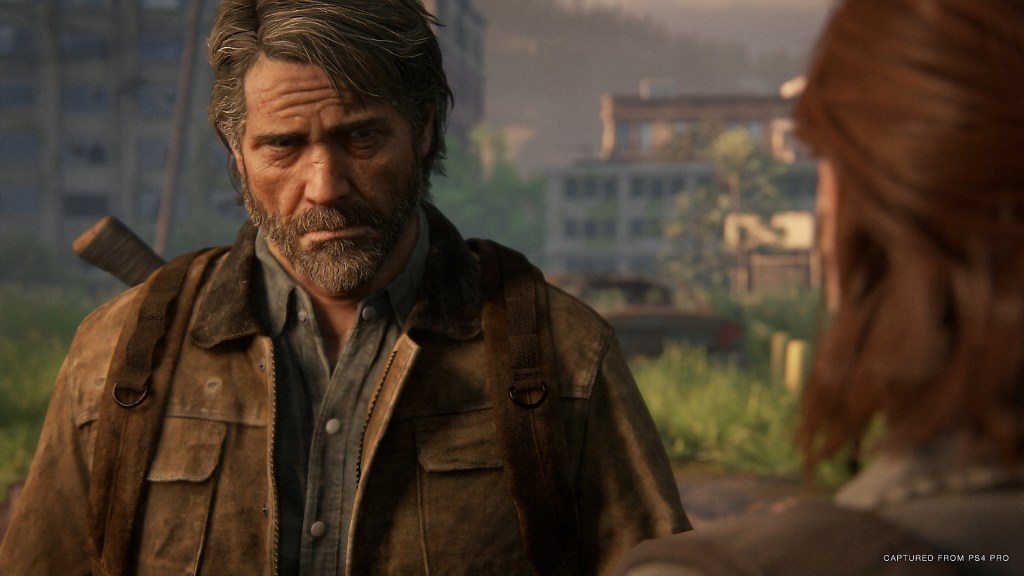
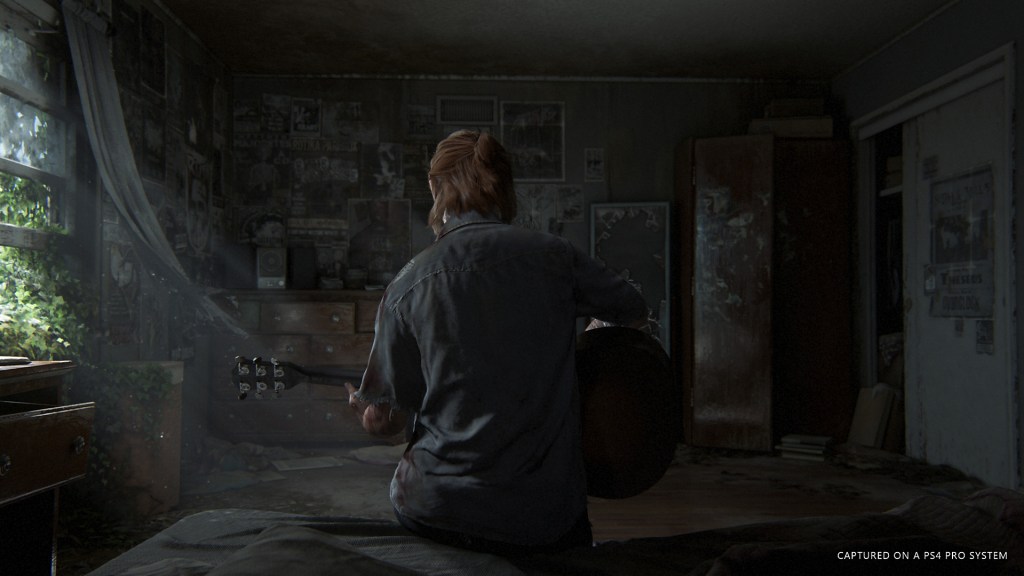
Before I begin, I want to make it explicitly clear that I never wanted The Last of Us 2 to fail. When essentially the entirety of the plot leaked online, I turned my head away and not once looked. Despite all the hate I heard it was receiving, I never wanted to find out what it was all about. I had faith in Naughty Dog, after all they earned it. From playing Jak and Daxter as a kid to growing up and maturing alongside Nathan Drake, I knew Naughty Dog would forever release quality, innovative, and quite frankly masterclass games for the rest of their years. My belief in this doctrine was only further cemented by the release of The Last of Us in 2013; a post-apocalyptic story about a broken father regaining his hope in the plague-ridden world when tasked with transporting an immune girl across the country for vaccine development, who would soon be his adopted daughter. The narrative told by the first Last of Us was near flawless, with the relationship between the main protagonists, Joel and Ellie, being the absolute brightest highlight of the entire game. When a sequel was announced, I couldn’t have been more thrilled. I waited, alongside all of you, just under seven years in eager anticipation as to what Naughty Dog would concoct this time. I was entirely confident it would be yet another masterpiece, as Uncharted 4: A Thief’s End (their previous title to TLOU2) was a downright 10/10, with one of the best narratives ever written for games, or entertainment media in general. To be completely honest, for the first half of my play through of TLOU2, I still held onto that sentiment. Even though the death of Joel was controversial to say the least, I didn’t have many issues with it at the time because it made narrative sense. Ellie needed a driving force for her revenge story, and the death of her adoptive father is as good a catalyst as any. However, when the player’s perspective is switched to Abby halfway through the game, the quality starts to drop quite a bit at a consistent pace (which is covered in my colleague Frank’s article on his views of the game as a whole), but even then the narrative was still salvageable by a large margin. However, the finale of the game, the satisfying resolution that was supposed to justify all the choices Naughty Dog made during development, was by far the most disappointing, poorly written, illogical, and at the risk of sounding unprofessional, downright stupid ending I’ve ever had the displeasure of experiencing. There are many reasons as to why this is the definitive case, too many to mention all at once in this format, but the largest sins will most certainly be addressed.
The Unavenged Murder of Joel Miller
Image Credit: PlayStation
To start, I’d like to address the rampaging elephant in the room: the unnecessary and insulting murder of gaming’s favorite dad, Joel Miller. When I initially played the game, although a part of my soul cracked when I witnessed the heinous crime, I did not believe it detracted from the overall plot. Ellie needed a driving force that would allow her to seek vengeance at any cost, and the death of Joel most certainly accomplished it. However, this was the largest gamble ND took with the narrative, and gambles like this NEED to pay off. This one, regrettably, did not in the absolute slightest. After 26 and a half hours of playtime, I finally reached the coast of Santa Barbara to find a weakened Abby on death’s door. After cutting her down from the torture pillar, I was incredibly nervous. Why was Ellie letting her go, surely she didn’t take two trips across the country for nothing? But then, at the end, Ellie forces Abby to fight her, and after a grueling battle you at last have her at your mercy; viciously drowning her in the shallows of the Pacific Ocean. I was talking out loud to my TV “Yes, finally! You thought I would just forget what you did?” along with a wide variety of obscenities and insults. In this moment, I was beyond satisfied. I didn’t understand why the game got all of this “unwarranted” hate, I was witnessing the best possible ending for the story they were telling. Then, in quite possibly the worst decision in writing I’ve ever seen, Ellie gets off of her. She let’s her leave Santa Barbara. She let’s her live. Now this next sentence is addressed to Naughty Dog and more specifically the “director” Neil Druckman in particular: One, are you out of your minds and two, did you ever take a creative writing class in school? I believe the honest answers would be yes and then no, because this is the most ludicrous and forced absurdity I’ve ever seen implemented into a supposed “masterpiece” of a videogame. Abby had to die for the story to succeed, it’s that simple. She savagely murdered the main protagonist of TLOU1 (Ellie’s adoptive father), and for what? She killed Jessie (Ellie’s best friend), crippled Tommy (Ellie’s adoptive uncle), and beat a pregnant Dina (Ellie’s girlfriend and then later wife) halfway to hell…and for what? I’m supposed to believe that after everything and everyone Abby took from Ellie, the two treks across America there and back again, she just forgives her? That would be akin to Obi-Wan Kenobi saying to Emperor Palpatine “Yeah, you killed mostly everyone in my order, destroyed the foundations of everything I believe in, and have always plotted my downfall along with turning my brother to evil, but I forgive you Sheev”. It just doesn’t make any sense. Any human being, no matter how morally just, who has suffered immense loss such as Ellie at the hands of one individual would never forgive said individual, let alone allow them to live when they’re at your complete mercy. From my perspective, it seems like a genuine insult from the post-Uncharted 4 team at Naughty Dog to the fans of the original TLOU by leaving Joel unavenged. It simply does not make the slightest bit of sense, and made me feel completely unsatisfied. It doesn’t matter how fantastic a videogame, book, or movie may be, if there isn’t a satisfying resolution (especially when you make huge gambles like killing off your main character), the entirety of the story is worthless. If there’s no payoff, no fitting conclusion, then may I ask what the point of it even was? Now I know what the ND fan army is going to counter this with, “But the cycle of violence was broken, therefore it’s a fitting resolution as that was the theme of the story. You may not like it, but that’s the way the narrative was supposed to go”. Well to start, that’s verifiably false as for fifty percent of the game’s development, Abby was supposed to die. Not only that, but Abby is not a likable character, nor a good person, as she continues to perpetuate this “cycle of violence” well past her initial murder of Joel. This “grand artistic expression” of an ending is nothing more than a cheap cop out. She didn’t deserve to survive, even for Lev’s sake, as I’ll outline now.
The Abby Problem
Image Credit: PlayStation
As mentioned in our previous TLOU2 TGP article, the community has discovered that the original game was supposed to be played entirely as Ellie, due to concept art showing Ellie in segments of the game where you play as Abby. I just wanted to lay this groundwork to show how her character was rushed and then poorly utilized, as to give more background as to why she’s so unlikable. You play as her in an early part of the game, hunting down someone who is obviously Joel if you can pick up on the not so subtle hints Abby and Owen drop in their dialogue. Now, as someone who had no knowledge of any leaks, what came next was a brutal shock. Joel dying within the first two hours made me irreversibly hate Abby, and it was a true mistake on ND’s part for implementing that twist so early. After that, I could never sympathize with her again. There was only one instance where I came close to understanding her plight, as her father was murdered at the start of her half of the game. My father passed when I was extremely young as well, and in that moment I did feel her pain; and Naughty Dog I commend you for that. However, after that ND, you completely lost me. Not only does she kill Joel in a unnecessary and evil fashion (as he made her father’s death quick), she’s doing it out of pure revenge, whereas Joel committed his violence out of protection for someone he loved. Not only that, but if the Fireflies would have just told Ellie that she would die during surgery, she would’ve agreed to it and talked Joel down, resulting in no bloodshed and a cure. Due to this lack of understanding (pushed heavily by Abby’s father and reinforced by Abby herself), they just go for it without telling Ellie, setting Joel off. Therefore Joel’s actions, although while still wrong, is more justified than Joel’s murder. So, in a sense, Abby started the cycle of violence by seeking revenge and offensive violence first, and even continued to show that she was not a good person even after the fact. While she does save two children (only because they saved her life first), she massacres many WLF members who once fought alongside her in the process. Now, some may say it was out of self defense, but Abby (now a deserter and traitor), Lev, and Yara drew first blood by killing Isaac, the leader of the WLF, and was the provocation for them hunting Abby and her child cronies. An army doesn’t let their general go unavenged, just like a daughter shouldn’t allow her father to be, but I’ve already discussed that. There certainly were avenues to avoid that bloodshed, but Abby jumped straight to the gun. Besides her acts of unjustified violence, additionally she lacks moral fortitude. This is shown as she lies down with her ex, Owen, even though he is currently taken and expecting a child. Both parties are to blame here as it takes two to tango, but Abby is still at fault all the same. After experiencing all of this, once you reach the theater as Abby where Ellie is hiding out, they force you to fight Ellie as her, which I did not want to do whatsoever. Over the course of her story, they try to slightly turn you against Ellie in certain parts by trying to get the player to sympathize with Abby and her friends, but that never happens due to the aforementioned murder of Joel among other poor writing decisions/unconvincing dialogue. In fact, I let Ellie kill me at first because that’s the way I’d want it to go. They tried to push this new, invasive character too much, and if you never played the first game, sure it might work. But majority of people who play a direct sequel to a game have played the original, and that holds true to TLOU just like it does to anything else. To view both games as a complete story, only the first half remains quality. Abby’s character and progression of violence as a whole warrants her lack of survival, and yet they still let her live. Why, so that Lev would have someone with her? Why would Ellie care about that, regardless if she can relate to the child? It’s the same kid that put an arrow into her Uncle, leaving him crippled. And yes, Lev did tell Abby to stop before she killed a pregnant Dina (which, by the way, makes Abby a great role model and likable character, right ND? Especially since when Ellie killed Mel she had no idea of the pregnancy, and was visibly sickened when she found out. What did Abby say when she found out Dina was pregnant, with her blade to Dina’s throat? Oh yeah, that’s right: “Good.”), but Lev’s the one who led Abby to them in the first place so…yeah, I don’t have much sympathy for her either. If this was the first TLOU, this all very well could have theoretically worked. However, it’s not, and the blurry line between right and wrong that Naughty Dog tried to craft fell flat on its face and came out crystal clear. By the ending of the game, not only has Abby shown she lacks character and morality/ethics, but has already clearly painted herself as the villain by viciously killing our beloved Joel Miller with the support of all of her friends, which immediately justifies Ellie’s vengeance to the player. Mel, Owen’s pregnant girlfriend, said it best: “You’re a terrible person Abby. You always have been”.
Conclusion
Image Credit: PlayStation
Don’t worry, I’m not going to pull a Naughty Dog and leave you feeling empty inside, as this exposé will have a satisfying resolution. Although, there isn’t much more to say, but I just need to once again express how deeply disappointed I am with this game, as seven years of waiting amounted to no pay off whatsoever. Whether you’re writing an essay for school, a screenplay in a coffee shop, or a storyline for a videogame, you most certainly are allowed to take risks with your creation. In fact, I’d even wager that narrative gambles are necessary to capture the audience’s attention and insure they stick around for the entire time. However, in doing so, you need said risks to pay off. Without a satisfying resolution, it doesn’t matter how incredible the rest of the narrative is; the story is unfinished, the audience is unfulfilled. They feel as if their time was wasted, there was no fitting conclusion that can ease their mind to the controversial decisions made by the narrative. Honestly, I would rather have never played TLOU2, and kept the story of the first game unsoiled. Therefore, it is my argument that the narrative of The Last of Us 2 is, undoubtedly, worthless.
When I first watched the trailer for Ghostrunner (PC, XB1, PS4), it appeared to me as a crossover between Dishonored, Shadow Warrior, and Mirror’s Edge; all wrapped up in a Cyberpunk setting. And while visually the game does draw from these inspirations, the gameplay on offer is truly something unique, yet familiar all the same. Throughout my 13 minute, 4 second run to reach The Whisper, the main objective of the demo, I learned a lot about Ghostrunner, and how wrong my assumptions about the title’s gameplay were. Make no mistake, this is no complaint, I just have to admit that I was surprised at the sheer difficulty of this game. The only other title I can compare it to in this regard is Superhot, at least in terms of how the death system works. You die in one hit, however, unlike Superhot where you can freeze time to stay alive and you go back to the start of the level when you fail, in Ghostrunner you are constantly on the move in order to survive and you revert back to the most recent checkpoint upon death. This is due to the levels featuring multiple combat scenarios, with checkpoints placed after each victory as you move towards an end objective. This leads into the next gameplay aspect that surprised me about Ghostrunner; you could almost say it’s a puzzle game. As the available methods of movement, enemy placement, and area layout are different in between each checkpoint, you’ll be experimenting (and as a result, dying) over and over again to figure out the right pattern, or puzzle solution if you will, to dispatch your enemies swiftly and cleanly with your Cyber Katana. This is by no means a complaint, as the challenge of constantly moving while finding the right pattern to success was always satisfying and rewarding. There were moments of frustration, though, as there is a steep learning curve before you get the fluidity of the character’s movements down to a science. Additionally, and although this only occurred twice, I did get stuck in the geometry while wall-running, resulting in unfair deaths. Other than those minor instances, I am happy to report that the overwhelming majority of deaths I succumbed to were from my own mistakes. Ghostrunner, in the end, surprised me with a constant, unexpected challenge; but also rewarded me with immense satisfaction as I cut down my enemies with seemingly the speed of light itself. Although the demo was short, it was lengthy enough to leave me wanting for more, and is definitely making me consider purchasing the game at release. Ghostrunner is definitely an upcoming title to keep a close eye on this year, just don’t blink or you’ll miss it.
At long last, Capcom has officially announced Resident Evil VIII: Village, set to release on Xbox Series X, PS5, and PC in early 2021. We here at TGP happen to be avid RE players ourselves, and I personally cannot contain my excitement for this next installment of the revolutionary horror IP. RE8 will be a direct sequel to RE7, following and concluding the journey of current RE protagonist Ethan Winters, in his never-ending struggle to find out “what the hell is going on”. In all seriousness, though, we really don’t know the full extent of what is going on in RE8. From Chris Redfield executing Mia Winters to the Spencer family and Umbrella likely making a return, the trailer for RE8 left more questions than answers (which in all honestly, isn’t entirely a complaint from me). Although certain features have been confirmed, such as the triumphant returns of the first person perspective and the new age RE inventory, many have been left up in the air. All that’s left to do now is wait until more information is released by Capcom, or, speculate like there’s no tomorrow. While I will be writing a lore speculation article at a later date, as of right now I’d like to ponder the aspects of RE8 I feel would be welcomed, and those that wouldn’t; rather than making assumptions on the steps the narrative will take. Without further adieu, here are our hopes for Resident Evil: VIIIage.
Credit: Capcom
Want: Don’t Hold Back the Horror
Resident Evil 7 introduced a level of sadism to RE that had never been seen before, and it was for the better. It made the game more atmospheric, intense, stressful, and above all else: horrifying. If anything, I would hope RE8 ups the stakes with the insanity on display, cranking the dial past eleven. To put it plainly: Capcom, hold absolutely nothing back, show us the most wretched nightmares you’re capable of imagining. Based on the trailer it looks like this request will be honored, but only future gameplay will tell if that’s accurate.
Don’t Want: Hollywood Action
Recent statements by Capcom have indicated that RE8 will lean more into action, which given Capcom’s history could mean a multitude of things. It could mean that there will be more enemies on screen and more ammunition available to account for that, which is what I believe they meant by their statement (for reference, think RE2R to RE3R). I have no issues with this as I’ve completed RE3R thirteen times, but I would have a problem if they take it too far and delve back into Hollywood action set pieces. I don’t believe I need to illustrate what I mean by “too far”, as RE5 and RE6 are prime examples (and although I love those games, they are not Resident Evil). Capcom, the line you are walking is a fine one: please stay on the right side of it.
Want: Leon S. Kennedy and/or Jill Valentine
Now this one I threw in here a bit out of bias, but come on Capcom! Where’s Leon? Where’s Jill? After the C-Virus outbreak was eradicated in 2012, Leon Scott Kennedy was seemingly M.I.A, being absent and not even mentioned in Revelations 2 or RE7. As for Jill, after rescuing Chris and Sheva with Josh in RE5, she has apparently disappeared as well. Granted, we saw Leon make a spectacular comeback in RE2R with Jill swiftly following suit in RE3R (along with being the main protagonist in Revelations 1) , but chronologically they are nowhere to be found in the present day. Don’t get me wrong, Chris Redfield is by far my favorite RE character and I’m always ecstatic to see him, but Leon and/or Jill showing up in RE8 (even if it’s only a slight cameo) would make me beam from ear to ear.
Don’t Want: Bullet Sponge Enemies
Before anyone wants to tell me to “get good”, let me preface this by saying that I have beaten almost every Resident Evil release multiple times and a good number of those on the highest difficulties available, and RE7 happens to be my favorite out of them all. However, there are occasions in RE7 where a molded can take over an entire pistol magazine to put down on normal difficulty, which is pretty absurd. Without enhanced handgun ammo, flight is the superior option to fight in RE7, which I don’t necessarily always appreciate. I prefer having the choice as to how I want to handle encounters, instead of stunning and running because I know I’ll just be wasting ammo otherwise. RE2R is an even worse offender of this, at times requiring me to deliver FIFTEEN precise headshots on STANDARD to a regular zombie before they are permanently dealt with. I got to say, I’m not a fan of that one bit, and I hope RE8 can find a better equilibrium for damage output by the player (closer to the consistency of RE3R, since RE2R doesn’t have as much consistency).
Want: A Satisfying Conclusion
As previously mentioned, Capcom has stated that this will be the end of Ethan Winters’ journey. If that’s the case, I need answers to the following: who are The Connections? Have they been undermining Umbrella this entire time? Who is in charge of them, is it Wesker (please no)? What exactly was Lucas trying to send to them in Not a Hero? Was the molded outbreak and shipwreck always planned, or truly just a terrible accident brought on by Eveline? These are just the inquiries I have left over from RE7, and if this is the last time we’ll see Ethan, I need to know. RE8 will certainly add more questions on top of these , but if they are all answered I’ll be satisfied. I cannot adamantly express enough how much I don’t want any loose ends lying around if this is truly the end of Ethan’s story. Now this next point can definitely be argued, but I personally hope Ethan makes it out of this whole experience alive. In my opinion, he deserves it after all he’s been through.
Credit: VG247.com
Don’t Want: Tacked-on Multiplayer
We all know why this is here, so I’ll make this point short and sweet. I love RE3R, but I can’t help but feel that content was cut (some justifiably cut, such as the worm in Fox Park, but other cut content such as the Clock Tower was inexcusable) in order to leave time available to develop Resident Evil: Resistance. RE: Resistance is an asymmetric multiplayer game created to establish a live-service platform and sell microtransactions by being set in the RE universe, however it’s anything but RE. I have very little interest in it and still have not played it to this day. I can only imagine how grand in scope RE3R could have truly been, if it wasn’t for RE: Resistance detracting from the development process. I don’t imagine they will, but I hope Capcom does not repeat the same mistake again, let alone with the next mainline RE release. If you want a quality multiplayer RE game Capcom, have a development team who’s not already busy making a game create it from the ground up.
Want: Larger Explorable Areas and Backtracking
Although RE7 had quite a lot of enjoyable backtracking, it lacked the open-ended nature that RE4 made many accustomed to. While RE3R’s Downtown Raccoon City had many corners and crevices to explore and rummage around in like the areas of RE4, it’s the only area with that freedom throughout the entire game, along with minimal backtracking required. If Resident Evil 8 could have open-ended areas such as the Downtown Raccoon City of RE3R, with the consistency of said areas such as RE4, and the backtracking and area memorization of RE7, we could have a flawless masterpiece on our hands. With a subtitle such as Village, I hope this is the goal Capcom is striving for.
Don’t Want: Wesker is Alive
He’s an iconic villain, and he should stay that way. Wesker became so powerful it took leaving him to melt inside an active volcano and decapitating him with two RPG’s to put him in the grave. Capcom has been dropping hints of his survival over the years since, and I hope it isn’t true. There’s nothing Capcom could do to top what they already did with Wesker’s character, that is without diving head first back into ludicrous action absurdity. Let RE5’s finale have meaning. Let Wesker lie, his time is done.
Want: Quality Post-Launch DLC
RE7’s DLC was everything it should have been. We got a variety of videotapes that brought new insights to the Baker family’s backstory and later sadism, a conclusion to Chris Redfield and Lucas Baker’s RE7 storyline via Not a Hero (which was free), and End of Zoe; an insanely fun conclusion to Zoe’s story where you play as Joe Baker, and acts as an overall epilogue to RE7’s story. I had no problem paying more money for these experiences, as I felt they were well worth the asking price and was not content that was cut from the original game. After being left incredibly hungry over the announcement of no DLC for RE3R, I hope Capcom continues and expands RE8’s story post release, in a worthwhile manner.
Don’t Want: A Short Experience
RE3R took many by surprise with how swiftly it concluded, even on a first playthrough. I don’t imagine we’ll see the same result with RE8, as it has had more time in development, but I feel the need to address this concern nonetheless. Capcom, this game should take 15-20 hours to complete on a first playthrough, MINIMUM. Anything less than that would honestly be pitiful, especially since RE8 will be the first next-gen RE iteration. A quality, lengthy, and replayable experience such as RE7 and RE4 is what the community expects. Allow me to reiterate, I love RE3R, but another game of such an unsubstantial length will not suffice, especially if it’s the immediate following release.
When one initially thinks of what a “Resident Evil” game should entail, most fans immediately recognize that survival-horror is a key design aspect that the team over at Capcom should utilize during development. Make no mistake, I do not disagree with this philosophy. However, there have been moments throughout the series’ existence where the formula ran a bit dry for some. With Resident Evil’s 1, 2, and 3, Capcom established a clear format for the franchise, and for a lot of hardcore fans that was enough. The mainstream, on the other hand, became less invested in the franchise over time, with releases such as Code: Veronica leaving many (myself not included) tired of the “same old zombie game”. This stagnation of the player base left Capcom unsure as to where the once innovative survival-horror series should go next, if anywhere. Luckily, though, after a stint in development hell and multiple incarnations, Resident Evil 4 was released to the GameCube in 2004, and after that: everything changed. Although still adopting the classic tank-controls for player movement, RE4 catapulted the franchise into a new sub-genre; action-survival horror. This time around, Leon Kennedy could deliver roundhouse kicks to his enemies, engage in QTE knife fights, fight a gigantic lake monster, and do flips on a Jet ski while rescuing the President’s daughter from an exploding island; to name just a few plunges into over the top Hollywood action. Additionally, RE4 simply changed the gaming industry forever. Third-person shooters started to become very similar after 2004, imitating RE4’s over the shoulder perspective and evolving the genre as a whole, leading to massive successes such as the Gears of War series (and many, many to follow). This revolutionary shake-up emboldened the developers of RE to delve further down the napalm-infused rabbit hole of Hollywood action, and after five years in 2009, Resident Evil 5 was released worldwide. Capcom, to put it bluntly, struck gold. Maintaining the title of their best selling game until the release of Monster Hunter World in 2017, RE5 has sold 11.9 million units across a wide array of platforms as of December 2019. RE5 was a major financial victory for multiple reasons: the entirety of the game could be played in co-op, it offered a lot of replay-ability across numerous modes, Wesker was back, and it heavily escalated RE4’s more “explosive” tendencies. What do I mean by that? It went down to the bottom of the action rabbit-hole and exited out the other side into high octane Wonderland. Capcom now had a clear vision of where to embark unto next, wanting to construct the following iteration of RE into the “ultimate horror entertainment”. Following this mantra, Resident Evil 6 was born, and eventually released to eager players in 2012. Unfortunately for Capcom, as most know, die-hard fans resented RE6. It failed to deliver on one necessary element, one key component that earned the franchise its entire reputation: horror.
Credit: metro.co.uk
Before I start my defense in favor of the “Island of Misfit Toys” of RE games, I need to address why I had to establish a basic outline of the series’ history. There are some who would argue that RE6 and the absurdity that came along with it simply appeared out of nowhere with no justification in sight, but that is not the case whatsoever. Capcom was fearful before the release of RE4, being pinned into the back of a corner so small that they had to reinvent the core gameplay of their beloved horror IP in order for it to survive. What they saw after that and post RE5 lead them to the assumption that more action was necessary to stay out of that corner; i.e. increased sales from RE4 to RE5. Unfortunately and unintentionally, Capcom jumped the shark for most if not all long-time RE fans as a result of this endeavor. Negative opinions of the game flourished, the following of which I concur with. To start plainly, horror itself was absent for the overwhelming majority of the experience. The gameplay had been neutered in terms of difficulty, even by RE4 standards, leaving any tension prevalent in previous titles to the wayside. Co-op play made a return to the stage, but this time heavily influencing the game design and its mechanics as a whole. The action on display surpassed Michael Bay levels of insanity, with set pieces running amok in all four campaigns. Oh yeah, I forgot to mention, there’s four campaigns: all with different play-styles. Some might view the distinct campaigns as a positive, but I can’t help but view it as a crippling hindrance. The multiple play-styles leaves an all around disjointed feeling when viewing the campaigns as a singular story or playing them back to back, featuring stark contrasts among them and an all around inconsistent experience. Majority of fans ripped RE6 into mangled shreds for those reasons, and in terms of what a Resident Evil game should be, justifiably so (in my opinion). However, when taken out of the context of what a mainline Resident Evil release should look and play like, is Resident Evil 6 a bad game? My answer is a resounding no.
Credit: Valve, Capcom
First off, I would like to readdress the complaint I mentioned about the co-op integration. In terms of a Resident Evil release, as previously stated, yes co-op helps mold the game into something that it shouldn’t technically be. However, when viewed outside of that lens, co-op in RE6 with a friend as your counterpart instead of the partner AI is honestly a hysterical good time. I’ve played through all four campaigns three times each, and every single one of those playthroughs I did with a good friend, if for nothing but to laugh at the chaotic nature of what we were playing. But with the great and expansive movement/dodge system, the co-op QTE’s where we had to trust in and rely on one another to survive, and the high-octane boss battles; the co-op play on offer is some of the best you can achieve in a third-person shooter. Even during lackluster campaign’s such as Chris’ and Ada’s, there is always fun to be had with a brother in arms at your side. It’s undeniable that this is the intended way for RE6 to be played, and although that holds true, there is still enjoyment to be found in the content offered even while in single player. Set pieces such as boss fights with the Ustanak in Jake’s campaign are so ludicrously insane and out of the realm of reality that no other word but “hardcore” can define it . In particular, the final hand to hand brawl with the Nemesis copy-cat is incredibly cinematic. You confront the menace on an unstable low-hanging beam above scorching lava, disarmed and outmatched, with only your bare hands as a means of defense. The demented-face ghoul looks at you, overcome with an intense and destructive rage that he’s been saving for release unto one person and one person only: the player. He charges at you with inhuman fury and determination, knowing that this is the end, the last time you two ever face each other. I won’t spoil won’t comes next in case anyone reading has yet to play RE6, but rest assured that the fight that ensues is from the realms of blockbusters such as Mission Impossible and Clash of the Titans, which makes it so entertaining. If you have accepted what the game is at this point, have acknowledged that it is not true Resident Evil, and have viewed it as it’s own game and not an innovative continuation of it’s franchise, then the set pieces such as the one I have just described will be as rewarding for you as they were for me. Granted, not all have as much payoff as Jake’s final boss fight, but they do make you feel as if you are truly an over the top action hero and part of one of the most explosive Hollywood blockbusters to date. Is RE6, namesake aside, a Resident Evil game? No, but I don’t believe RE5 to be either, and in full transparency RE4 comes close to veering far from its series’ foundations as well. But does that necessarily have to mean they are subpar, inadequate games in their own right? Absolutely, definitively not. Whatever you may think of RE6 and my opinions on it, it is certainly the case that it was one of the best things to happen to the Resident Evil IP as a whole. In order to prove this claim, I ask you to recall the corner Capcom put themselves into with the original mainline RE games. Well, history often repeats itself when the lessons of the past are forgotten, and that philosophy does not exclude business or the videogame industry. After immense burnout and disinterest was expressed by the fandom post RE6, the team at Capcom had to once again reinvent their beloved “horror” IP. This second dire quest for innovation, in my opinion, and therefore RE6 by association, was the catalyst that launched Resident Evil into a new era: the most terrifying and greatest it has ever been.
Credit: Valve, Capcom
In the search of transformation and reconciliation, Capcom fell back on something they’d forgotten, yet still something solid: their roots. After the disastrous effect that RE6 had on the community, the developers needed to go back to what Resident Evil was at its core; survival-horror. Not only did they deliver, but they exceeded all expectations of the disenfranchised fandom. In January of 2017, Resident Evil 7 was released to universal critical and commercial praise. My personal favorite of the series, this new iteration went back to a mansion setting (originally popularized by RE1), and delved deeper into survival-horror than ever before. The atmosphere wasn’t just creepy, the enemies weren’t just scary, and the bosses weren’t just intimidating. The Baker family introduced a level of sadism to RE that was never present before, and as a horror fanatic in and outside of gaming, I was thrilled. Whether it be the grotesque torture that Ethan endures and perseveres through, the mysterious and malevolent villain in Eveline, or the all new up close and personal first person perspective; Resident Evil 7 fired on all cylinders to deliver a near flawless masterpiece of horror, regardless of medium or art form. This wasn’t Capcom’s only accomplishment, though, with RE7’s success not only revitalizing RE itself, but ushering in a new age for the franchise. Survival-horror was the name of the game again, with following releases such as RE2 Remake and RE3 Remake adopting the same general play style, apart from the first person perspective (although this is not the definitive case with mods) and more sadistic nature of RE7. With Resident Evil 8’s announcement supposedly looming and a RE4 Remake hinted to be in development, Capcom has finally returned to its sweet home.
Credit: Game Informer
Resident Evil 6 set out to accomplish many things, and to it’s credit achieved many of them. Although it did technically deliver on the “ultimate horror entertainment” sentiment, the horror element was certainly the most absent variable of that equation. Even with as entertaining as it was, it sacrificed its identity to achieve the level of action the team at Capcom wanted to reach. As a result, one of the best, most ridiculously fun, arcade co-op third-person shooters was made. Unfortunately, it was at the cost of the hardcore fans who stuck with the franchise since day one. However, I do believe that most would agree that the long term pay off of RE6’s existence, in hindsight, outweighs the betrayal fans felt at release. Due to it’s monumental failure, Resident Evil’s core philosophies were forced to go underground and reflect, coming out more twisted, horrific, and better than it ever was before. None of this would have occurred if Resident Evil 6 hadn’t released and bombed, making one wonder what the franchise would look like today if it wasn’t for that historic debacle. One thing is for sure, though; without RE6, Resident Evil wouldn’t be in the position it maintains in the horror genre today, which was the same it held back in the late 90’s and early 2000’s: number one. Plus, we got an entertaining, high-octane fueled thrill ride of a game to experience alongside a local S.T.A.R.S officer near you (or maybe just a friend over the mic instead).
When most people hear the term “remaster”, the usual responses range from a sigh to a shrug. Remasters of recent years have hardly ever been impressive, typically consisting of only an HD resolution upgrade or a more stable, locked frame rate. However, with the recent release of Saints Row: The Third Remastered on Xbox One, PS4, and PC; developers Volition and Sperasoft have effectively set a new heightened standard for the industry.
Credit: Deep Silver
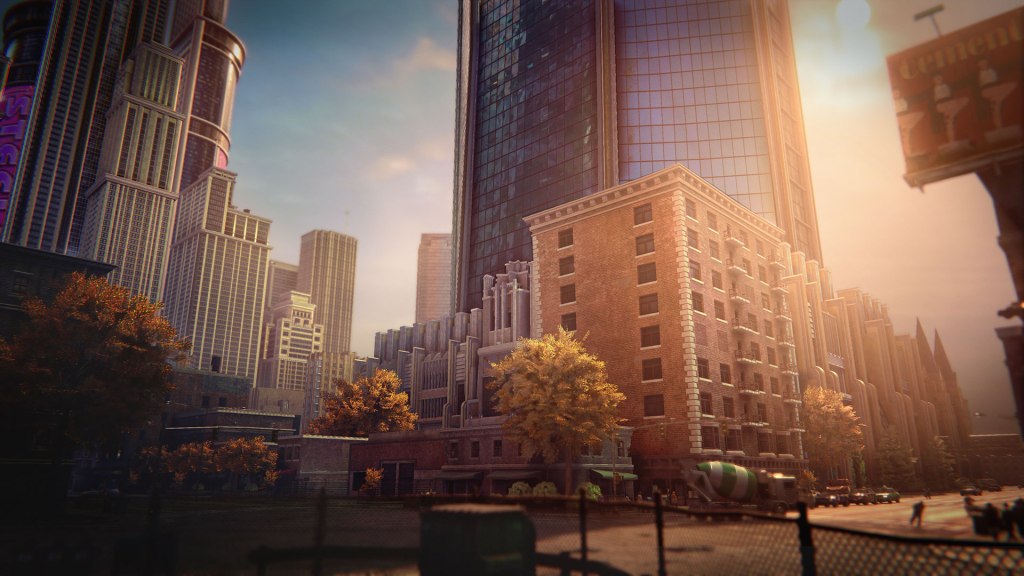
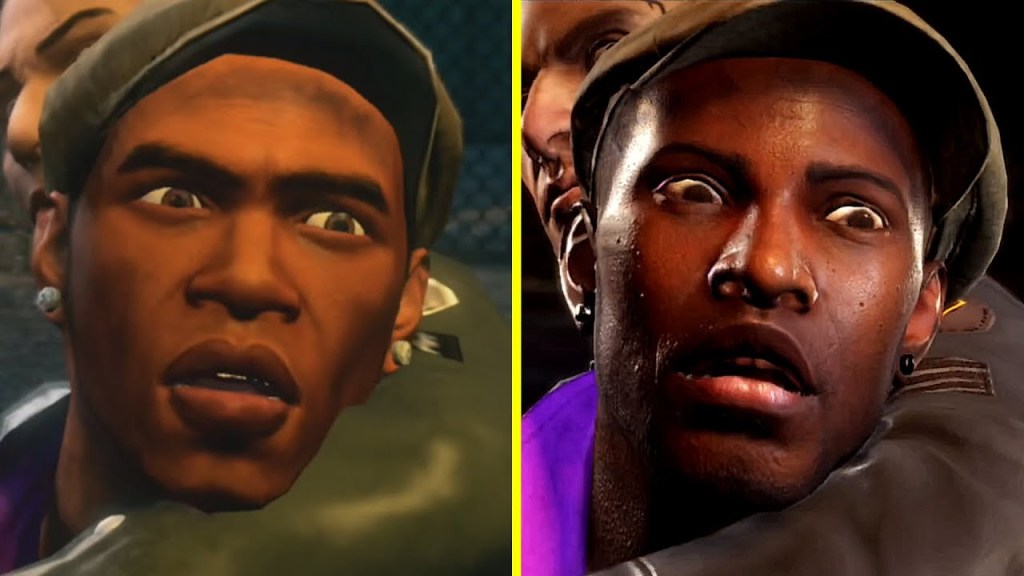
As of writing, I have personally spent 30+ hours in the remastered city of Steelport, and the differences I’ve spotted are monumental to say the least. In my play-through of the Xbox One X version, there are major differences immediately noticed in the opening mission, “When Good Heists Go Bad”. To start, experiencing this game in stunning 4K visuals with a stable 60FPS is incredible. From the initial shootout inside of the Morningstar bank to stealing the entire vault itself via helicopter, I never once thought I was playing a game released in 2011, due in part to ZERO frame drops. In addition, the lighting engine has been fully redone, which exemplifies your homies’ redesigns as well. Johnny Gat’s new look, for example, is by far the best it’s ever been; being less stylized and more realistic than previous iterations. Another excellent character redesign is Pierce Washington’s, who just like Gat falls more in line with our reality. It’s not just your allies who have received a fresh coat of paint, however, as publisher Deep Silver points out “Every weapon has been remodelled, every car has been redesigned and a vast proportion of the city has been retextured…”, along with “…around 4,000 assets reworked, the complete update has been expertly handled by Sperasoft. It has transformed environments, character models and visual effects…”. When it comes to visuals and graphically fidelity, SR3R redefines the term “remastered”.
However, I would not be conducting my due diligence if I claimed all is well in revisited Steelport. While more good has come from this enhanced re-release than bad, the negative needs to be addressed as it lead to immense personal frustration. Certain gameplay aspects from the original release have had minimal to no tweaks at all, and it obviously shows. Vehicle controls are still incredibly clunky, with tank-like driving and cars seeming to have hit boxes larger than the actual models themselves. Aerial vehicles are just as unreliable as well, leading to bouncing off of and into a series of various buildings resulting in a fiery and explosive death, from a chain of events caused by one slight crash into an object. Speaking of crashes, the game itself crashed to my Xbox dashboard a tad more often than the average 2020 release, so be sure to save frequently. Furthermore, the AI (in particular the Homies and Saints Gang Members) are, to put it bluntly, incredibly idiotic. They can do it all, from destroying your mission objective, to not responding to commands or following the player, and/or getting caught in and endless animation cycle until they fall in “battle”. I must admit, though, that I experienced the majority of these issues during side missions; which I put myself through all of to achieve 100% completion. For the average player, encountering these gripes on a consistent basis is not likely.
Credit: Deep Silver
Saints Row: The Third Remastered does many things right; it’s completely faithful to the original, the graphical upgrade is substantial, bugs and glitches are manageable, and all DLC is bundled in for an asking price of $40 USD. Regardless, it isn’t a perfect release, suffering from dated controls and AI that are practically being shined on by a metaphorical spotlight to the player at times. In the end, for all of it’s faults (which, in the long run, aren’t many), it has done more than enough to rise above the mediocrity of this generation of remasters. Developers could stand to learn a thing or two from Volition and Sperasoft because frankly, this remaster is a home run. Now, only one question weighing on my mind remains: why put so much effort into remastering a game that isn’t even a decade old yet? My guess? Saints Row V is on its merry way.














 The Game Preview